
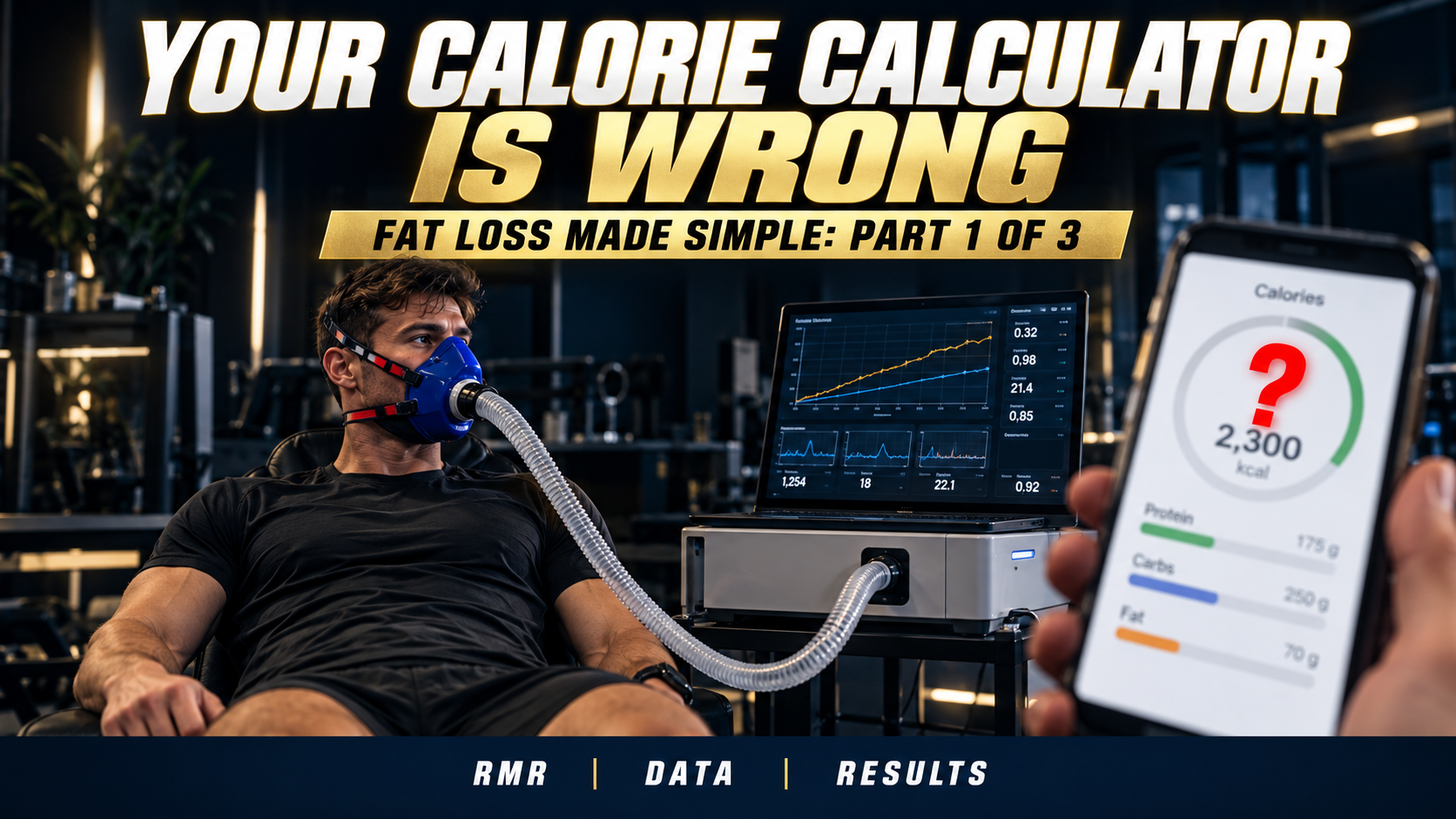
Fat Loss Made Simple: Why Your Calorie Calculator Is Probably Wrong (Part 1 of 3)
You've typed your details into an online calculator, eaten exactly what it told you for a month, and the scales haven't moved. Sound familiar? You're not broken and you're not lacking willpower. There's a good chance the number was wrong from the start. This is Part 1 of my Fat Loss Made Simple series, and it's all about getting your numbers right. Let's break it down.
1. Where Your Calories Actually Go
Your body burns energy in three main ways:
- Your resting metabolic rate (RMR), the energy it takes just to keep you alive. This is the big one, usually around 60 to 70 percent of your daily total
- Movement, from training and walking to fidgeting and chasing the kids
- Digesting your food, a smaller slice of roughly 10 percent
Get your RMR wrong and everything you build on top of it is wrong too.
2. Calculators Are Built on Averages
Most apps guess your RMR from your age, height, weight and sex. That works for the average person, but nobody is perfectly average.
A major review of these equations found that even the best one can still be more than 10 percent out for plenty of people. That might not sound like much, but 10 percent of 1,600 calories is 160 a day. Over a week that's more than 1,100 calories, which can be the whole difference between losing fat and standing still.
3. Your Watch Isn't Much Better
Researchers at Stanford tested seven popular wrist worn trackers against lab equipment. Heart rate was pretty good. Calories burned? Not one of the devices got it to within 20 percent.
What to do:
- Use your watch for steps, heart rate and consistency
- Don't use it to decide how much food you've "earned"
4. How to Find Your Real Number
You've got two options:
- Track honestly for two to three weeks. Keep your food steady, weigh yourself most mornings and look at the weekly average, not single days
- Or skip the guesswork and get tested. An RMR test measures the air you breathe in and out to show exactly what your body burns at rest, and from there we can work out your whole day
I run RMR testing at Kin3tic Performance in North Hykeham, and it's where I start with every fat loss client I coach. Once you know your real maintenance, a modest deficit is far easier to get right.
Final Thoughts
Fat loss isn't magic, but it does start with the right numbers. Keep it simple:
- Treat calculators as a rough starting guess
- Don't eat back your watch calories
- Judge progress on weekly averages
- Measure, don't guess
Next week in Part 2 we're getting into the food: how to hit your numbers without feeling hungry all the time.
Want to know your real numbers? Book an RMR test or a free consultation, or message me on Instagram @clinton_pt.